
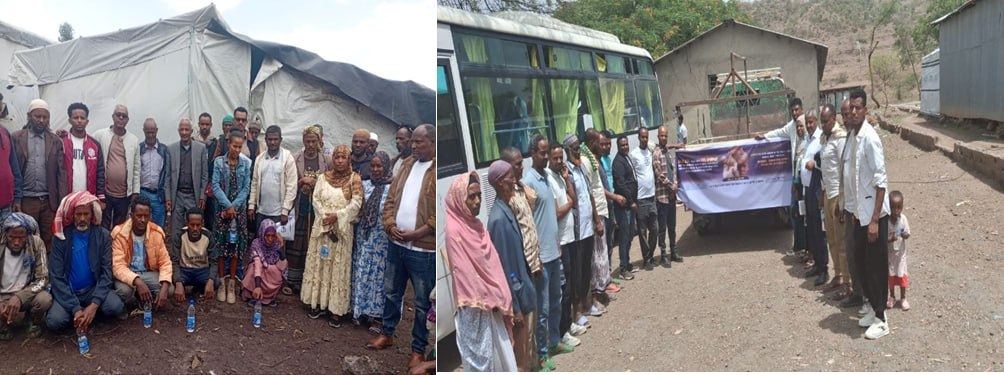
We conducted joint monitoring and support supervision from July 20 -21, 2026 at Degan and Gerado in collaboration with key stakeholders, including IDP parents, committees, community representatives, CBOs, NGOs, and government sector offices. This inclusive approach ensured that diverse perspectives were incorporated into the monitoring process, reinforcing accountability and collective responsibility.
The main objectives of the joint monitoring were:
Assess Implementation Status: To evaluate the progress and quality of SYGE’s activities on SGBV prevention, response, and related interventions at Degan and Gerado IDP sites, ensuring that agreements, trainings, and awareness programs are being implemented as planned.
Strengthen Multi-Stakeholder Collaboration: To foster coordinated engagement among IDP committees, parents, communities, religious leaders, education offices, women & children affairs, DRM structures, CBOs, and NGOs, thereby reinforcing collective responsibility in addressing IDP needs and sustaining project outcomes.
Promote Accountability and Learning:To establish a transparent monitoring framework that documents findings, shares lessons learned, and provides actionable recommendations for improving service delivery, community participation, and institutional accountability across both sites.
Key Observations
During the supervision, the team conducted site visits to the IDP centers and surrounding schools. The following critical issues were observed:
Shelter conditions: The shelters were poorly constructed, overcrowded, and unsafe. In some cases, more than 90 individuals were concentrated in a single room, creating SGBV prevalence, serious health and protection risks.
Basic services: IDP parents and community members raised urgent concerns regarding the lack of adequate food, clean water, and electricity, which directly affects their safety, dignity, and wellbeing.
Protection risks: The poor living conditions increase vulnerability to SGBV and other forms of exploitation, underscoring the need for immediate multi-sectoral intervention.
Consensus and Way Forward
The monitoring team reached a shared understanding that SGBV is a multi-sectoral issue requiring strong collaboration among all stakeholders. Effective prevention and response cannot be achieved by a single actor; it demands coordinated action across government institutions, community structures, and humanitarian partners.
The team emphasized the importance of:
Strengthening community-based protection mechanisms.
Enhancing government accountability and service delivery.
Mobilizing NGOs and CBOs to provide targeted support.
Ensuring youth and women’s active participation in awareness and advocacy efforts.
In conclusion, while progress has been made in implementing SGBV-related interventions, the monitoring exercise underscores that urgent, coordinated, and multi-sectoral responses are essential to address the structural vulnerabilities of IDPs. The findings will serve as a foundation for refining strategies, mobilizing resources, and ensuring that future interventions are responsive, inclusive, and impactful.